Showing posts with label Interbellum. Show all posts

Saturday, 6 April 2024

The Hattingen Incident (Austro-Bavaria vs Burgundy, 1936)

An Austro-Bavarian force was moving south-west into Baden on the south bank of the Danube to cut off Burgundian communations to the Untersee area, but met a Burgundian force moving north-east along the same south bank. They met near Hattingen, and the first shots were fired in what is now known as the ABB War (by the Austro Bavarian artillery, as it happened).  


 Austro Bavarian artillery preparing to fire on Burgundian units advancing towards Hattingen (top of the picture)


How did it come to this, I hear you ask. Why are Austro-Bavaria and Burgundy at War on the Danube? 

Well, after WW1, as you may recall, the Allies wanted to make sure the empires of Germany, Austria-Hungary and the Ottomans could never again threaten their hegemoney. So these were all broken up, but some of these changes had unforeseen coonsequences.

Firstly, when Bavaria was broken off from Germany, no one predicted it would unite with the other major Catholic German state, Austria, who had been split from its Hungarian and Italian posessions. Using a structure remarkable similar to the Austro-Hungarian one, Austro-Bavaria has become a major MittelEuropa state.

Also, if you recall, the Allies desire to build a buffer state between Germany and France had led to the formation of a new Lotharingia - parts of North France and Southern Gemany were put together as a "buffer" state between the two (with some objection by the France and Germany and the delight of the newly formed country's folk, given the US had promised a lot of recosntruction money). 

What no one anticipated is that some parts of France, fed up with the Paris-central government after WW1, united with this new state to form a New Burgundy.

And of course no sooner was this done than these two new states grabbed another German split-off state, Baden-Wurttemburg, between them. Burgundy took Baden (and Pfalz to boot), Austro-Bavaria took Wurttemburg.

But the bit of Baden that projected far east to the Bodensee was, in Austria-Hungary's opinion, too stratgically sensitive to allow Burgundy to own. Similarly, Burgundy consided the piece of Wurrtemburg that pushed down into "Baden lands" was not acceptable. Both launched surprise attacks at the same time.......

Anyway, we are where we are, and the Burgundians have just had an unpleasant surprise as artillery came thumping down on their advanced positions. Both sides rapidly advanced towards Hattingen.


Burgundians advance from the south - west, occupying the high ground by the the Beau Gaste Inn while their armour (bottom) moves right

A Bavarian unit moved rapidly to occupy the Inn, while anorther Bavarian unit moved to occupy Hattingen itself. The Inn, built in North African style was a famous landmark in the area at the time, built by an Austrian who had served in the Foreign Legion. It was heavily damaged in this battle.

Bavarian Infantry supported by Ford Tankettes advances  towards Hattingen iteslf  .   

The Bavarians were now in Hattingen and occupying the Inn, but the Bugundians mounted a major attack on the Inn from the high ground and surrounding buildings and subjected it to artillery and fire from tankettes. The Bavarian and Burgundians tankettes also started shooting at each other

In the meanwhile, the Austro-Bavarians had launched an Austrian cavalry and armoured car pincer attack on their right flank... 


Austrian armoured cars, cavalry and horse artillery advance to their right (west) to make a pincer move around Hattingen

 ..but this was stopped by Burgundian tanks rushing to block them, and later followed up by Burgundian infantry. The Austrians cavalry dismounted and called down artillery on the tanks but it had turned into a stalemate


Burgundian multi-turreted British supplied medium tanks stopped the Austrian cavalry, but came under heavy shell fire themselves.  

Both sides' flank attacks were neutralized and it became a battle of attrition. The Burgundians eventually forced the Austrian out of the Inn and could start to push again on their right. This overwhelmed the Austro-Bavarians and they were forced to withdraw. (We used O Group rules, roughly level pegging until last turn when Burgundy inflicted 2 FUBARS, winning 4-2)

Both armies follow the Imagi-Nations code of "Invent your counry, design your flag, paint your army - and in the Interwar era , choose the 1920's/30's armour you love - and assert your right to rule!.

Also, each time a new Imagi-Nation is invented, we have to bend the Versailles Treaty ever further. Thank heavens the next two entrants are a British  privateering Foreign Legion and the US Marines, neither of whom need Treaty-bending. 

PS - re the Beau Gaste Inn -  we had that model of a North African building complex, on it went, and to justify it being in Germany the name and alt-history backstory followed. (In Alt-operetta-plot, Leopold does join the Foreign Legion, and all else follows from that.)

Friday, 29 March 2024

Action at Stare Sztretum, Trans Syldavia

A Bordurian force was very nearly destroyed at Stare Sztretum, but the cavalry (and air force) arrived in the nick of time!

The town of Stare Sztretum lies (right hand side of table) at a key branching point of major roads  -one  to the North, one to the sea (West), and one to the main port city of Szeszik (south - west).

In a repeat of the pattern so far, Syldavian forces set up defences in the town and neighbouring hamlets, and stopped the main frontal Bordurian thrust in its tracks (well strictly speaking, in its boots - Borduria has less armour than Syldavia). 

And again the Bordurians were surprised to see Burgundian Italiian forces fighting with the Syldavians


However, a Bordurian Advanced Recce force of armoured cars and cavalry, with its horse artillery and machine gun Tchanka waggons., managed to work around the right flank

But it was hard going - firstly, the supporting BA-10 armoured cars were destroyed by Syldavian 25mm anti tank guns hidden in the woods, and the cavalry was then attacked by Burgundian tankettes and retired behind the hill while the horse artillery deployed and attempted to destroy the tankettes. (Above picture, bottom left). 

A key to the battle - as with the 2 previous ones - was to call up the air support. The dreaded Polikarpov Po 2's of the Bordurian Air Force bombed the woods where the Syldavian forces were entrenched (below)  and you can see the Syldavian tankettes are taking damage from the Bordurian horse artillery  (which fortunately was very accurate -  those tankettes were unstoppable by cavalry or tchanka MMGs, but a 75mm Schneider shell is a different matter),

(As an aside - did you know, in Russia, that when the KV-1s appeared the Germans had no effective anti tank to match it so rushed old French Schneiders up to the front as they could at least disable the Russian tanks at a decent range)


The Bordurian cavalry were then able to advance behind the town, cutting communications and forcing the Syldavians to retire again. Aircraft can reach parts of the table other troops can't.....   

This was the first "real" Bordurian victory, we used points based on capturing enough on-field objectives and the Bordurians  getting round the flank of the Syldavian forces was one way of achieving that. 

The cavalry managed it, by the whiskers of Kurvi Tasch! (It was also the first use of a cavalry force in any of our games, apart from pure scouting.) 

(In) Conclusion

Three battles into the Invasion, this has proved great fun so far. As with all good Imagi-Nations, the army structures, unifiorms etc are of our own devising. It is also an oppoprtunity to field all sorts of 1930's vehicles - a real rivet fest!

The Mysterious Burgundians are part of a developing Alt-Hustory story (as more players get involved and armies are produced

All of us have gone for large variety of different vehicles in our armies in (signifing the rapid development of weapons, and the huge experimetation in the 1930's of course, nothing to with our desire to field loads of interesting machines nonono :D ).

Borduria I imagine (using the Tintin books as reference) as fairly undeveloped and rural.and their military is not very efficient. But it has a larger population than the more advanced and mechanised Syldavian forces.

Borduria starts the 1930's under Italian/German influence (Musstler) but after the failed invasion of Syldavia a Russian leaning Taschist regime putsches them out and takes power. Borduria thus has a collection of (mainly) German and Russian equipment. Borduria also has a much bigger reliance on horses in the military (the role of the horse in the 1930's was hugely disputed) and struggles with getting enough fuel for the limited number of trucks (another reason it wants Szeszik, it gains  ots own port).

Syldavia (again from Tinitin) is seen as a typical 1930's Balkan country, with a hereditary king and aristocracy, and has invested heavily in modernising itself under its young King's reign. Syldavia threw in its lot with the victorious allies after WW1, and has a bias towards British and French equipment.

The broader Alt - History picture will unfold over the next, but for now it's worth knowing that Europe post WW1 was a very fractious place, and we imagine some fracture that could have occurred, actually did. Hence Italian troops of the Burgundian Commonwealth appearing in defence of Trans Syldavia. 

Next to enter the stage will be the Austro-Bavarian Dual Kingdom...(see below). Austro-Bavaria and Burgundy will be fighting the next battle in the series.


Saturday, 24 February 2024

Stop Press! Bordurians Invade Trans Syldavia!

The Bordurians have crossed the Trans Syldavian border in a number of places, their strategy seems to be to send a large column to try and set up blockades at the main passes over the Syldavian Alps so Syldavian reinforcements can't get into Trans Syldavia easily, while another column is moving straight for the port city of Szeszik, and a third is crossing at he area around Kustomz to follow the northern road, probably to try and go around any opposition eho is trying to prevent the direct advance to Szeszik.

Our Man on the spot  has ieced together what haoppened at Kustomz and filed thsi report befire having to leave in a hurry. The Syldavian forces at Kustomz fought well (see last post) but were eventually overcome by sheer numbers and had to retire.  (The Syldavians won the actual battle, but they had to achieve a  high kill rate to force Borduria back, so we judged - for this mini campaign - that the Bordurian 2nd wave would have over-run Kustomz.)

He deceded discretion was the better part of valour and retired back into Trans Syldavia, But the next morning was  manabegd to photograph Bordurian BT-5 tanks rolling through town he was staying in and decided to leg it again.


He retired as far as the hamlets of Velke and Male Klenplek where  Syldavian forces had set up a defendive line. But no sonner had he filled up teh car than Bordurians advance forces attacked. 

The Bordurians again had bigger numbers but the Syldavians have better armour.and training. Our man was ALSO very surprised to see a a small force of Burgundians from Italy fighting with the Syldavian forces (more on this later....)  

 (Above) Bordurian troops preparing to attack Syldavian forces n the hamlets.moving down the main road to Szeszik

Again the Bordurians struggled to make headway against the better equipped Syldavians in defence, and again the use of aircraft was effective. 

In this game we also introduced a Bordurian Mountain Infantry unit (aka better infantry than the poor quality Bordurian line troops) and they had more impact in assaulting built up areas.

Again it was a Syldavian victory in numbers, but the Bordurians carried the attack into Velke Klenplek, thus securing the main road forward and we judged the Bordurians would secure it and the Syldavians would retire again (and thus of course, another battle would have to be fought....).  

 (Below) Bordurian Polikarpov Po 2 attacking Burgundian troops. The Syldavians command were taken by surprise by the Bordurian invasion and have few air assets in TransSyldavia.


Sunday, 7 January 2024

The Trans-Syldavian War of 1938 starts......

One of the things the Tintin books oddly do not cover is Trans-Syldavia, that region north of the Syldavian Alps whose history which has been covered in this blog over the years. Now as you all know, in 1867 Trans-Syldavia was awarded to Borduria as part of the Austro-Hungarian compromise and in WW1 Borduria supported the Austro Hungarian empire (when it looked like they would win) , whereas Syldavia had (belatedly) supported the Allies and was thus rewarded with Trans-Syldavia  at the Treaty of Versailles in 1919. 

Of course, ever since then, Bordurian foreign policy as been to get Trans-Syldavia back, as it had given that most coveted of things, a route to the sea. When the attempt of Anschluss failed (covered in the Tintin book "King Ottokar's Sceptre" and Kûrvi-Tasch putsched Musstler out of power, Borduria's aims were reduced to getting Trans-Syldavia back. Borduria has been "testing" the Syldavians by "exercising" on the border and occasionally "accidently" going across it.

But news hitting the wires today, it looks like phony war may be over.......our correspondent in Klow  was travelling to Szohod yesterday, and had just breakfasted at the Hotel XXXX in the Syldavian border town of Kustomzs and was travelling the to the nearby border post when Bordurian cavalry clattered past racing the other way, into Syldavia. On nearing border the post he realised it was now a Bordurian operational HQ and started to take some photographs when Bordurian troops ran up and put him in the cell at the border post, along with a the Syldavian Borders Officials and a few hapless civilians caught up in the affray.


Senior Bordurian Army staff at the border post near Kustomsz, as Bordurian armoured cars roll over into Syldavia

Fortunately the Bordurians were too busy with invading to pay them much notice, and in all the chaos no one had checked if the Syldavian border guards had keys to the cell (they did) and - no one is quite sure how - the guards and he made their escape while the Bordurian officers were at lunch, making their way back carefully across country as the action unfolded.

Arriving back long after dark (and nearly getting shot by jumpy Syldavian pickets near Kustomsz and wired this report.

"We escaped from the border post by crawling along a ditch for several hundred meters and them making a run for some woods .From there we saw Bordurian armoured cars and horse artillery racing into Syldavia along the road to Kustomz. Soon affter that Bordurian infantry started marching through. We were nearly discovered when Bordurian infantry started moving close to the woods on the other side. They were Mountain troops, the Syldavian customs officials said.

And last but not least, the Bordurian Air Force attacked in support, attacking the Syldavian positions around Kustomz.


We await more information...


Sunday, 7 May 2023

Interbellum Imagi-Nations in the Balkans - O Group Rules

Yesterday saw the clash between a number of our Interwar Imagi-Nations being built - Syldavia and Burgundy faced up to Borduria and the Austro-Bavarians somewhere in the Balkans, using O Group rules.
 

Burgundian Independent tanks and Rolls Royce armoured cars support Syldavian infantry. In the far disance, Bordurian AH-1V tankettes advance along the main road to Sprodj

This Imagi-Nation project is mainly concocted to allow troops dressed in unlikely uniforms from countries that never existed to use weapons that never fought. The background assumes a somewhat different Treaty of Versailles, plus some regions of Europe unilaterally declaring indpendence in the chaos after WW1, yet another Civil War in the US, plus Red Russian attempts to retake their territories on the North American West Coast. So far Syldavia, Borduria, Byzantium, Burgundy, Austro-Bavaria and both sides the US 2nd Civil war have taken the field. 

In the spirit of Imagi-nations, it's locate your country, design your flag and uniform, pick your tanks and guns, and assert your right to rule!


Burgundians with tankette support moving through the cornfield to attack Bordurians in the woods

 For the cognoscenti, the battle pitted Burgundian Char D's, Independent Tanks, Rolls Royce armoured cars and Polish TKS tankettes and 2 pounder guns against the Indiana Jones tanks of Austro-Bavaria (ever cautious, they have gone for upgrading trusted technology) and the Czech-equipped Bordurians with AH-1V tankettes, Vz 30 six wheel armoured cars and Lt 35 tanks,  with French 25mm and 47mm AT guns


 Czech vz 30 armoured cars of the Bordurian Splozh  Huszars attempt to outflank the Burgundian left

 And by the whiskers of Kurvi Tasch, it was a glorious Bordurian victory!

We had to build a fairly comprehensive set of data on all the 1920's/30's equipment used (getting data on the Indiana Jones Tank was tricky) but O Grou is vfairly good for thi as  ts a "category" based ruleset - you just have to decicde whether the tanks had thin armour, negligently thin armour, or ludicrously thin armour

Next time - inventing our own army org structures...


Tuesday, 25 October 2022

Interbellum Wars - Borduria

 слава бордурія ! (Glory to Borduria)


Bordurian Interbellum equipment - armour and heavy weapons (still thinking about other camouflage)

The previous post introduced Byzantium in the 1920's and 30's. I realised I needed some imaginary opponents, and the first state that came to mind was Borduria, from the Tintin books.

To those unfamiliar with The Adventures of Tintin, the Balkan state of  Borduria is mentioned in the 1939 book  King Ottokar's Sceptre, ruled by the Fascistic dictator Musstler (I'm sure you can see where that came from). In the The Calculus Affair (1956), Borduria is depicted as a stereotypical Stalinist regime, ruled by Marshal Kûrvi-Tasch - and the symbol of the Kûrvi-Tasch regime is a large moustache. Here is the Bordurian flag of the Tasch Regime:


I wanted my Bordurian imaginary nation to be the Kûrvi-Tasch regime and not the Musstler one as (i) the moustache symbol is a must-have and (ii) because 1930's Russian gear looks far cooler than German. So, obviously at some time in the late 1930's the Musstler regime was overthrown via a Soviet sponsored takeover, and Kûrvi-Tasch was set up in its place. One last thing - Tintin's Borduria seems to wrote in Latin lettering but I want Cyrillic - clearly one of  Marshal Kûrvi-Tasch's crash programs was to go Cyrillic like his masters! So, with that:

To bring Borduria into being in the Balkans required a bit of rejigging of history. Since Byzantium's existence depended on it being formed as a class C mandate in 1919 at the partiale xpense of Yugoslavia, it seemed that one may as well throw the whole Balkan settlement up in the air and delete Yugoslavia before it occurred, and allow Borduria and other imaginary Balkan nations to emerge instead. 

As mentioned in the preceding Byzantium post, one of the issues in the later 1930's was the smaller states getting equipment from major nations, they tended to produce for themselves and their client states. The Soviet Union was no different, but as a Stalinist client state Borduria has no problems getting (fairly) up to date equipment.

Incidentally, for no other reason than one of the other players has a 15mm WW1 Austro Hungarian army to use in this project, it was clear that Austria and Hungary must still be kept together. But Czechoslovakia had to be hived off in order to keep all their arms exports flowing through to Byzantium and other Balkan imagi-nations, ditto all Austria-Hungary's other Balkan possessions had to be confiscated so various other imaginary Balkan nations could emerge. (More on this later, readers of this blog may recall the 1848 independence  struggles of Trans Syldavia......)  

At any rate, for the purposes of Interbellum gaming, Borduria is equipped with all the Russian 1930's stuff I have collected, with the German equipment inherited from the earlier Musstler era (mainly aircraft, infantry weapons and artillery). So in short, Borduria fields:

- Scout / Light Armoured car - Sd Kfz 221

- Heavy armoured car - BA-6 (later 10)

- Light/Cavalry tank - BT-5 (later 7)

- Medium / Infantry tank - T-28

- They also use the German 37mm Pak 30, and the Russian 45mm infantry field gun.

Wednesday, 30 March 2022

1930's Interbellum Byzantia


Above - the emergence of an Imagi-Nation - see text for forces used and why

Some years ago I sketched out Byzantium re-emerging, as a Mandate state after WW1 (see here for the back story). I started building a force for project this in 28mm using Greek Evzone models from Eureka miniatures (and Disney Atlantic tanks of course) but it never really went that far. (Interestingly these Evzones, used as Real Greeks, turned into one of my most played armies because the Evzones look much the same in Balkan Wars, WW1, Russian Civil War and WW2 - and so I have gamed with them across all these periods.)

But now....post Lockdown.one of my clubmates and his son have built 1930's Imagi-Nations in 15mm, so it is time to restart my own project, albeit in 15mm scale. The benefit I am finding is that its cheaper, armies are bigger, and less detail = less work = faster gaming.

In the 1920's there was little appetite for war and most armies had huge stocks of WW1 equipment to work through before there was any justification for bringing in new weaponry. But by the early 1930's the delayed technical advances were coming quickly, and drove a lot of debate and change (and also rate of change meant systems that were a few years old were almost obsolescent and constantly forced new thinking).

However despite the changes there were some standard trends, vehicle types etc that emerged in this period, and general principles in how they are to be used:

The Armoured Fighting Vehicles

Amoured cars - there were "Light" and "Heavy" cars, usually grouped together in Reconnaisance Units

- Light were mainly for scouting and typically caried a machine gun or (later)  a heavy machine gun or anti-tank rifle level main gun. One sub-type of light armoured car is the Scout car, which can also carry a few troops.

- Heavy tended to be better armoured ans carried heavier weapons

Tanks - in this era theer were quite a few tank types. As well as Light, Medium and Heavy tanaks there were also Infantry and Cavalry tanks.

- Light were "scouting" tanks and were typically lightly armed and armoured

- "Cavalry" or cruiser tanks - were fast light tanks, used to outmanouvre eemies and and pursue after the breakthrough, so they should have longer range and carry more fuel and so were bigger than most light tanks 

- Medium were the "battle" tank, they were to destroy any enemy formations. Oddly in the early days they often have general purpose medium calibre howitzers guns but over time they inceasingly have anti ank main guns.

- Heavy tanks are attached to the infantry and help with breaking through enemy formations. They start with carrying large (typically 75mm) howitzers. In WW2 they also start to sport larger anti tanks guns (often repurposed anti aircraft guns)

- "Infantry" tanks' role is to support infanry. Speed is not an issue, so these are typically slow. They are mobile pillboxes. As infantry anti tank capability increases the need for better armour becomes clear. 

One interestng feature of the 1930's is the multi turret tank. There is an idea that tanks (especially infanty tanks) are "landships" and must carry weapons in different turrets. The French Char 2c, British Independet Tank and Russian T-28 and T-35 are the most over the top examples 

Two other AFV systems emerged in this period - tankettes and tank destroyers.

- Tankettes were very popular in the early part of this period, they were seen as either tracked scouting vehicles or infantry supporting mobile MG nests (or both) - is smaller, faster (and cheaper) lower versions of an Infantry tank. They died out as they were typically too lightly armoured when infantry anti tank improved, but the Britsh "Bren carrier" became very succesful in WW2 as it also had a transport capability.(Many tankettes were re-used as trailer or artillery tows)

- Tank Destroyers were lightly armoured tanks, armoured cars and even trucks with larger anti tank guns.

Also, from WW1 days Anti Aircraft trucks were built, and in the 1930's anti aircraft AFVs emerge. built  These were mainly based on existing armoured car or tank hulls. The armoured ones could be used in combat.

 Transport

Trucks are increasingly being used to transport troops and supplies over this period, and some unts have dedicated truck transport. Various fully tracked vehicles are used as artillery tows. 

The Kegresse and "Halftrack" emerge in this period, and are quite popular for a while. The aim is to get tracked vehicle cross country performamce and wheeled vehicle ease/speed of travel. It turns out they also had the maintenance problems of tanks. Some halftracks are also used as armoured cars.

Horses are still fairly common in rear echelon transport and artillery tows.

The Infantry

WW1 saw a number of weapons appear (machine guns, mortars, rifle grenades, light machine guns, submacine guns) that had to be worked into infantry formations. Over time the increasing use of tanks forced the emergence of anti tank infantry weapons (initially large calibre rifles) and anti tank (higher muzzle velocity) guns. 

Structure wise, there was also debate about the traditional "Square" unit (4 platoons, companies etc) vs the triangular (3 platoons, companies etc). Cavalry was still a thing in this period, they had proven very useful in the Russian Civil War, and a horse was still a very effcetive way of moving men or materiel fast in this era. A major problem was how to structure units to integrate tanks (of all sorts), with infantry, cavalry, motor and horse transport. Many counries at this time had structures where the tank units were only integrated with infantry units at a high (typically divisional) level. Some countries just dumped them all in the same Division.

Those that fought in the Spanish Civil War start to understand that integration needs to happen at a lower level, and the Germans had the radical concept of infantry in hafltracks working with the tanks - but this was still not common in 1939

Special forces didn't really exist yet, Mountain Infantry, Marines and the new fangled Parachute troops are the main major specialist formations with their own (typically lighter) equipment. 

Bicycles are used to move infantry and don't require huge logistics effort (fuel/repair), reserve infantry battalions in foot formations were often bicycle troops so they could move fast to where they were needed. Downside is troops are tired after cycling long distances.

Cavalry arguably fight more like mounted infantry so is in effect a type of mobile infantry.

Recconnaisance troops were a specialism, they were usually kept at brigade and divisional level. Non armoured cars, lightly armoured Scout cars and motorcycles are often used by these troops and they are often combined with armoured cars and/or light tanks/tankettes.

Building a Force

We are using O Group battalion level rules for this project, so for my Battalion structure I went for the compromise "3+1" battalion - 3 Infantry Companies and a Heavy Weapons Company with mortar, machine gun and anti tank gun platoons. The rules also are designed for "Reinforced battalions" with a few vehicles etc. 

(Note also these levels of forces can easily step up a level to the Brigade level action using Fistful of ToWs rules for example)

There are 3 cases where a Reinforced Battalion occurs as far as I can see:

(i) "Recce in strength - Infantry company plus some of the Divisional Recce units

(ii) Armour and Infantry working together (oddly enough, in a lot of the 1930's TO&E structures armour and infantry were separated, the German integrated approach was relatively radical.)

(iii) "Reinforced" means having divisional infantry heavy weapons (artillery, anti-tank, machine guns etc added) 

So all that remains is to choose the equipment that you fancy modelling. Rule 1 is they have to have been available pre 1939. Rule 2 is the nation making them had to want to sell them. Rule 3 is they had to be weird /cool looking/weird/interesting:

Update - I have changed the equipment allocation from when I started the project, as I have bought more tanls :D The Russian gear initially cited is now used by Byzantium's hostile Balkan neighbour Borduria (see this post) - this is the New History;

Byzantium is assumed to have mainly bought what was available on the export market. By the late 1930's the major powers are using everything new they build for themselves. 

So I scoured the equipment of other similar smaller nations, and this list below is what Byzantium could arguably have obtained (apart from WW1 and 1920's kit) - whether bought, built (I assume they have some level of technical ability like say Hungary or Rumania) or otherwise attained:

Light Scout car -  The Citroen Kegresse halftrack line was around cince c 1934 and the US White M2A1 scout car came out in 1935 and either could arguably have been copied by a country that wanted something like it. The Czech OA vz. 30 6-wheel light armoured car found its way to a few countries.

Armoured car - The French tried to export the Citroen P-16 halftrack armoured car, and the Swedes exported the Landswerk L-180. A Byzantine own design - based on designs by the Hungarian designer Nicholas Straussner for Hungary (39m Csaba), or maybe designing something like South Africa's Marmon Herrington would be very possible. 

Tankettes ; Everyone bought or modified the British Carden Lloyd, and the Czech AH-1V and Italian L3/33 were exported.

Light tank - Swedish Landsverk L-60 tank (also modified into a Tank Destroyer), Czech LT 35 and Lt 38  (both used by Germans as Pz 35t and Pz 38t respectively) and Soviet T-26 were exported. The UK 6-ton tank was exported widely, Mk VI is a maybe (exported but only to Commonwealth).

Medium Tank - The"light medium" Hotchkiss H-35 or a "true medium" from Czech designs (e.g. Hungarian Turan )

Infantry Tank - Some countries obtained Renault R-35s. I assume Byzantium like many countries could buy WW1 Renault FT tanks that it could upgrade, these were still used as mobile infantry support into WW2.

Heavy Tank- No really heavy infantry tank was exported in this era. Arguably Byzantium could have modified WW1 tanks like the State of Hatay did, or maybe The Old Gang would have been amenable....

A few countries used tankettes or developed them (eg Renault UE Chenillette tractor-tankette) to pull battalion heavy weapons (AT guns etc).

Also some poweful anti tank guns were available to uparmour tanks or use as towed guns (or in tank destroyers) for example the French 25mm, Czech 37mm and 47mm guns were all exported.


Wednesday, 23 February 2022

Baroque!

The last few months have been enjoyably spent learning Baroque! It's the Renaissance / Pike & Shotte versio of Impetus but is a bit simpler (so faster to play)  and makes for a very enjoyable large game. I was introduced to it by a fellow SLW club member who - as a lockdown project - had built 6mm 1600s era Ottomans and Poles (see pics below), and that set the ball rolling.

Turks v Poles 6mm big battle

Close up - Impetus & Baroque rules use large stands so its easy to construct a complete 6mm battalion on a 15mm scale stand


Now, as any fule knoes, a 1500's era Renaissance army is just a late Medieval army with some extra (even more gaudily) dressed pikemen and arquebusiers, plus some Reiters with boar-spears and Millers (fully armoured cavalry replacing lances with pistols). I had already converted my Medieval Venetian army to the high Renaissance using this evil trick (plus in 15mm you can't see whether the old school Stradiotti, Elmeti, Leggiera et al are packing pistols between their thighs, so they transform from Medieval to Renaissance without a hitch).

I also have a Medieval Ottoman army,  so for an opponent to Venice I painted up some Janissaries and Balkan bandits with arquebusses. Painting loads more later cavalry also was not necessary - I read that (i) Turkish cavalry were reluctant to let go of their lances till well into the 1600s, and (ii) all those pictures of Spahis in Turbans are largely artists' pictures - when the going got tough, the Spahis put on their helmets. Instantly all my medieval muslim heavy cavalry became Renaissance cavalry (its rude to look between a Turk's thighs to see if those bulges are pistols or not...). 

Below - The Renaissance Turk module being built to attach to my Medieval Muslim Menagerie - Janissaries and Balkan bandits, plus I painted a unit of turban wearing troopers to be easily identified as the Sultan's own Qapukulu guard. Baroque also likes generals to be easily identifiable so the subgenerrls have impressively large flags and the magnificent Sultan has a magnificent flag, base and kettle drummer


These "Very Late Medieval" armies are timed to be around mid 1500's AD (i.e. when crossbows are still around, the knights are still in all their plate and finery etc, and billmen still had a job) as we all wanted to field all our Medieval toys. The Baroque rules start at c 1550 AD, and Impetus stops at c 1520 AD, so it was a question of which rules to use for c 1550 Renaissance games. The only solution was to field the same armies in Impetus and Baroque to see which we liked most. First up were my Venetians vs my johnny-built- lately Ottomans.

The Serene Republic and the Sublime Porte scrapping over some Greek island. Turks on the left. Big cavalry battle (bottom of pic, close), Venetian pike moving against the Janissaries cowering in the woods (centre) and out of pic (top) the Stradiots and Akinjis fought with dash and elan to outflank each other.


Comparing the two rulesets for this "between the wargames rules" period: Impetus handles the earlier weapons much better - if you want to use all the bows, crossbows, infantry pole-arms etc and want all teh detailed differences then use Impetus, as Baroque largely downgrades and abstracts these older weapons. But if you want a faster, less detailed game and use those arquebusses (usually unloved) like a boss, use Baroque.   

A note about bases - Impetus and Baroque use big bases whereas many other rulesets use smaller stands. In 15mm scale the Impetus base is 8 cm frontage, but the Baroque one is 12 cm. That 12 cm is (I think) so players who had existing Pike and Shot armes (typically based in 4cm frontage stands) could easily play Baroque without rebasing. Stands of shot each side of their pike stands is teh standard way of and fielding a pike and shot battalion. 

But in 1550 AD the Pike units still mainly have shot directly in front of the pike, so you can field shot at 8 cm frontage and then pile the pike ranks behind to get that deeep depth. Besides, the bulk of all our 1500's Renaissance armies' troops are drawn from our later Medieval ones, built for 8cm Impetus frontage - and no one was going to to rebase them all!

For what its worth, in both test games the Turks came out the winners, in pretty hard fought encounters - mainly because the Italian plated and plumed knights and "light" cavalry (aka more knights in full plate and plumery, just on unarmoured horses) - the best mercenaries money could buy - performed appallingly badly. The Serene Republic was somewhat fretted!

The best moment, across both games was (I think it was the Baroque game version) when the Turkish Zamburak unit (light guns on camels - who needs a fantasy army!), which had been hopeless in all the games so far, was charged by fierce, rapacious, moustachioed Venetian Stradiots wielding lances, sabres and pistols (you get the picture - dashing film star heroes vs nerdy popgun peddlars) . Clearly the gunners' route to paradise happening in real time. But the gunners finally found their mettle and discharged canisters full of dice pips, blowing the Stradiots off the table - they were probably more surprised than anyone!

But you could see how Turkey loses its "edge" in the Baroque era, as (cheap) infantry with shot starts to fear non-shock bow armed cavalry far less. Also, pike + shot fromations, even this early era version with arquebus, is a step up from the medieval equivalent (you can see why the Turks started to use a lot of battlefield obstructions and artillery in their centres) 

Close up - the real business end of a Renaissance Venetian army - mercenary Pike and Shot in ludicrous clothes and codpieces. Plated & plumed knights are still noble but more marginal. The times they are a changing....


Next up, another of our club members had readied his Hungarians for some Baroque action. Post Mohacs, Hungary had sort of stagnated in this era so doesn't have the amount of firepower of other countries (aka less new stuff to paint to get their Renaissance army going) but they still have a lot of good cavalry.  They and the Ottomans squared up.....

Below: Ottomans to the left,(Janissaries on the hill, left centre). Those Hungarians may be old fashoned but they have a lot of big, nasty blades in the centre - and their shooting also proved to be annoyingly good - and did I mention a lot of good cavalry. This time, the Hungarian noble knights (a cut above the Venetian mercenary ones ) turned the game by crashing through the Turkish Spahis (see top left corner of pic - those are Hungarian knights in hot pursuit of fleeing Turks).


In conclusion, Baroque is a great fun as a ruleset, good for doing quite big games, but it's more aimed at the post bow-and-bill Renaissance armies

Other players are readying their French and Spanish armies for more 1500's Renaissance battles. My next project is to build a few bitz to push my Ottomans to c 1650 (hanging onto those lances and helmets...) to take on my French....


Friday, 19 February 2021

Trabazond - New Byzantium's Enclave on the Eastern Black Sea

Old Trabazonde - pearl of the Eastern Black Sea

One of my gaming friends has started an Imagi-Nation somehere in Mesopotamia, and I thought it may in some way come into contact with the New Byzantine city of Trabazond, on the Turkish coast so it may be worth thinking about its forces as it is a "special case". 

The Turkish province of Trabazond was taken from them by Rssian in WW1 (This is true). To reward Russia for going all Bolshevik, and Turkey for being on the wrong side, it was given to Byzantium after WW1. The real reason was mainly to give the French and British navies a permanent base in the Eastern Black Sea. (This is Imagi-Nation)

The presence of these great powers kept it safe from acquitive hands in the Interwar years, but oddly being taken over by Germany when they overran Byzantium at the beginning of WW2, and then by the Soviets at the end, probably kept it "safe" for Byzantium during the war. It resumed its role as a Great Power naval base after WW2, with the US and USSR now also having access. It was to be returned to Byzantium in 1955, at the same time as German occuption stopped. This probably kept it out of acquisitive hands in that period as well, as Byzantium was in no state to defend it.

After the Suez Crisis in 1956 it was clear to Byzantium that the Great Powers were now the US and USSR and the latter were far closer to home, so it was time to cosy up to the Soviets a bit more. As part of this, a large part the naval facilities at Trabazond were offered to the Soviets for 20 years, the rest would remain "multi national". This probably kept Trabazond in Byzantine hands, and made it an "interesting" city in the peak Cold War years, (but that is the subject of a series of spy novels ;)   

At any rate, New Byantium managed to extricate the Soviets in the mid 1970's but then had the very real problem of keeping it from various acquisitive hands in the region. This mainly meant stopping attacks from over the mountains, along the shore, or from the sea.

Population was in the high hundreds of thousands, about half that of the European Themes, so the Thematic forces are about half that of the other Themes. Because of this (did I mention the acquisitive neighbours) there is always a part of the full time Tagmata stationed here, and it is a major Naval base and Air Force base.

Each Theme is supposed to have a full size full time Thematic Brigade and a divional size force of reservists. 

However, Trabazond hasn't that level of population, and a lot of hidden strong points in the mountains need are manning. so a lot of the military population is required for that.  

The area is essentially full of separate mountain valleys and passes, and each needs a fully capable force to defend it. So the resrvists of all stripes are organised in independent Demi-Brigades per valley area, and deach Demi Brigade has a force with most of the support functions elements of a Brigade.

Ditto, the standing Regulars may need to be split among a number of valleys so they too are organised into 3 self supporting Demi Brigades rather than a full Brigade. There is also a higher use of helicopters here to move forces quickly.

The structure of a Demi Brigade is essentially an allocation of Brigade level support assets into companies (eg of Armour, Artillery, AA, AT, Comms Recconnaisance etc) attached to a Battalion level of troops (and this Battalion may not have the standard 3+1 companies of infantry ). 


Sunday, 13 March 2016

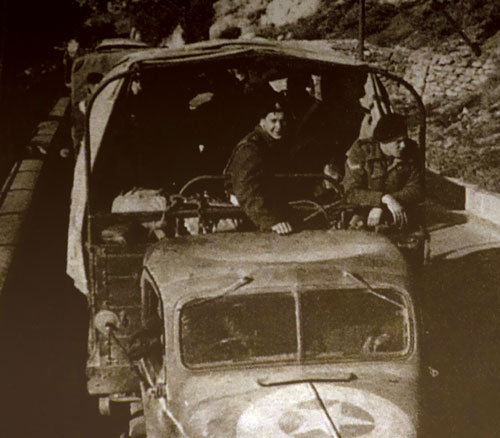
A Truck for all (WW2) seasons

When Strelets released their box set of South African WW2 Union Defence Force (UDF) 20mm plastic figures, this was the sign to set out on a project I have long wanted to do - the SA and KAR (Kings African Rifles) forces that fought against the Italians in East Africa in 1940/41 (a friend of mine at my club has just such an Italian army....) and they are also good for the early desert war (so long as you add in a decent no. of Men in Tin Hats)  and the little known invasion of Madagascar.

The next problem was to source the trucks. I needed many, the pre WW2 re-arming UDF had based itself on the German motorised divisions as the best solution to move forces fast over large expanses of usually fairly dry terrain,  and so had a LOT of trucks. The main infantry transport trucks were Ford 4x2 30 cwt (1.5 ton) trucks, the UDF commandeered nearly the entire production of trucks in 1940/41. Chevy and Dodge produced most of the 15 cwt trucks for the UDF.

The Great WW2 Truck Conundrum

But while rooting around for a model to use, I noticed something else. Every other country with Ford (and Chevy, Dodge et al) plants in country, started to turn these trucks to military use. This included Germany, who also had Ford plants. Not only that, they were supplied to the Soviets in large numbers.  

But here is the Great WW2 Truck Conundrum. This truck was used by nearly everyone in WW2, yet apart from a few (pretty expensive) resin models and a (very) few LRDG models with cut off cabs, you just cannot get these models in 20mm scale. You'd have thought something that you can use for every darn army in WW2 in every tear and sector would be a popular kit, but no.


http://www.ibiblio.org/hyperwar/UN/SouthAfrica/EAfrica/img/SAF-East-Africa-36.jpg

The Ubiquitous Truck - The UDF Entering Abyssinia 1941 (above) and (below) in Italy 1944/5 (below)

South African 3-ton truck


(Below) Australian Artillery tractor with 4x4 Marmon Herrington transmission , then Ford in German service, then Russian. The Russian one sports teh 1942 -onwards grill shape, and (to quote) "Together with his civilian ancestor, the 2G8T, from which he differed in the engine type and some minor modifications, the total amount of delivery sums up to 61,000, making the »Ford-6« the second most delivered truck."


Anyway, I happened to notice that a Russian kit manufacturer, PST, makes the Long Wheelbase Ford in Soviet service with exactly the right shape but has the the 1942-onwards grill, and for a reasonable price. I decided that (given the entire lack of these very common trucks in any wargames army, and thus the total lack of demand) that only the most rivet-counter wargamers would notice the difference between the '41 and '42 grills, or tell the difference between a '42 Ford or early war Chevy, and brought PST trucks on board in big numbers for my UDF army.
 
Converting from 30cwt to 15-20 cwt truck

Its just a matter of changing wheelbase length and back of truck, and the PST kit lends itself to an easy conversion - bringing the back wheelset forward, chopping the flatbed off at the 3rd stanchion, and ditto the side boards and tarp cover is a very simple operation 


Conversion from 30cwt LWB (left) to SWB (right), the SWB model can also be used for 1 tonner (20 cwt) that can (ahem) proxy for 15 cwt trucks without looking too out of place. More of the UDF truck park being built is in rear of photo...)  
 
The Truck for all seasons 

Having now built a bunch of these trucks, and looking at the meagre collection of trucks in my collection of US, later Commonwealth and Soviet 20mm armies it also became clear that, if painted with a suitable brown-green-dusty paint scheme all of them could use it as well. (Germans a bit harder as Ford Germany was cut off and never upped to the '43 grill, but hey who cares - could be captured ones right?)

As to colouring, this a picture of a South African truck in Italy 1944/5 (Dodge, as it happens - Chevies & Dodge's had a similar experience to Fords) - generic green-brown + dust s probably OK for all Allied armies at any rate, Jerry will just have to have captured ones when I play them :)


Thus I now have the Truck for All Seasons, for all my armies, (albeit with a little bit of licence....) 


Sunday, 9 June 2013

Breaking Out is hard to do

The Red army has surrounded a small pocket of Franco-Greek forces near Kherson, and the Greeks are attempting to break out. A probe attack by a company platoon of the 5/42 Evzones was launched early in the morning, after a pre-arranged barrage by Allied artillery in Kherson. The Greeks beliebved that there was a weak point on the North road where two large woods interected the lines of Red dugouts and spanish rider barked wire lines. They believed they could get into the woods and break out that way.


Red Lines, showing the 2 woods the Greeks decided to assault, the plan was to focus on the closer one, break in and then break out (red arrows)

As dawn approached, the Greeks filtered quietly through the trees towards the objectives. The Evzones were reinforced by 2 French FT-17 tanks and also brought up one of their Mountain Guns for close support. They decied to assault the rightmost wood en masse, while sending a diversionary force against the other of the 2 tanks, hoping the Reds would think there was a mass of infantry behind them, and mis-allocate any reserves

The barrage started, the tanks gunned their engines, and the infantry started rushing forward, acros teh open ground, one platoon behind the next. The Reds were shaken from the barrage and initially there was very little shooting from their lines, but the Red forward commander guessed correctly what was happening and rushed a squad to a large house just ahead of their lines so they could enfilade the Greeks as they broke out the trees. The Greeks had to divert one of their own squads from the assault to cover this off.


The Greek infantry attack in 2 waves, concentrating on the rightmost flank.

On the other flank the tanks advanced slowly. Initially they were pestered by snipers in a house in front of the Red lines but the 2 tanks raked it with MG fire and the mountain gun put a few rounds in, and it what was left of the house was then all quiet.The tanks trundled on at their magnificent 4 mph maximum speed.

Greeks forces were now starting to get close to the Red lines, but now the Reds had thrown off their shock and started shoting back, taking casualties off the Greeks. At this point it also became clear that a large barn and sandbag wall to the right of the Greek position was becoming a major problem. A squad of Greek Evzones moved up to the spanish riders barbed wire and started shooting at these troops, trying to get them to keep their heads down. The Greeks had Chauchat LMGs whrereas the Reds did not, and this helped them keep a suppressing fire. The Greek captain then signalled the mountain guns to place a salvo on the house, which they did, and that stunned the Reds shooting from it.


Red troops man the sandbag walls by the barn, shortly before the Greeks dropped a mountain-gun salvo onto it

A Red forward party of snipers, egged on by a Komissar, then moved into some shellholes in front of Red lines to enfilde the Greeks, and killed the Greek Captain!. The Greek lines wavered, but then a squad of Evzones charged the snipers, and took them out with cold steel They in turn were then pinned by fire from the Russian lines, but they had stopped the enfilading fire and the first Greek squads gained the woods.

On the other flank, the FT-17s were drawing closer to Red lines, and a Red field gun that had been brought up opened up on them, missing them narrowly. The close support Greek mountain gun shifted fire to silence the Red gun, but it was well hidden in some woods and remained a major threat. The tanks raked the position, trying to suppress the gun, but it would only be a matter of time before it started to knock the tanks out. The Reds also at this point decided to commit their reserves to stop the infantry attack, confident that the tank breakthrough was less likely, but the ruse had worked quite well, giving teh Greeks valuable time - the Reds would be attacking a wood that the Greeks were now moving into.


Red field gun starts to shoot at French tanks over open sights

At this point a noise grew louder, and  overhead a Geek Navy DH.4 was seen. The Greek AO had called it to take out a redoubt on the Greek infantry's left hand flank, but the Greeks in the shellholes were keeping that position's heads down. The semaphores waved desperately from the ground. The DH.4's observer picked up the change, banked and made towards the Russian gun firing at the tanks. A Red MG started to fire desperately into the sky but it was to no avail, the DH.4 made a strafing pass, banked, and then came back, and dropped its load on the position. There was silence from the gun after that.


Greek Naval DH.4 makes low pass over Red positions before bombing the Gun and trenches

And then, just as the Greeks were starting to enter the woods, we ran out of time. It was pack up time. The result was in the balance. Could the Greeks have reinforced the wood in time? Would the Russian reinforcements get there in force first? In counting up the casualties it transpired that the Greek initial barrage had been fairly effective, so Red casualties had also been high and forces were evenly matched still, and the Greeks were more concentrated, but we judged that the loss of the Greek Captain meant the Greeks probably wouldn't have been quite co-ordinated enough to hold the wood and reinforce it fast enough against the oncoming Red wave. The Reds breathed a huge sigh of relief as the Greeks withdrew.

Battle using Bolt Action, the WW2 rules even have the FT-17 tank in it! Sadly we ran out of time just before the real decisive action. I'm very proud of my DH.4, I still need to put the blue centre spots on the Greek roundels but it acquitted itself very well in its first ever sortie. (Its a 1/48 scale Roden kit, and its a bugger to assemble the wings!!)

More Red propaganda and puictures over here from Komissar Janos

Friday, 7 June 2013

Action at Kherson

We resume our Odessa Files mini-campaign with Bolt Action rules used for WW1. In the scenario, a platoon of the Greek 5/42 Evzones is holding a hamlet on the Kherson approach road, which a Red reinforced company with armoured cars and heavy weapons is hoping to overrun in a short, sharp attack. There are French of variable quality in reserve, who may or may not come to the Greeks' aid (depending on dice).


The sleepy hamlet, Greek Evzones are billeted in the houses on the far side of the left-right road in the centre

The Reds decided to attack in two platoon columns with supporrting machine guns along the 2 roads (running bottom right to top left, picture above)) with an armoured car leading each column, while a third platoon and field guns were to be in reserve, to be thrown in where a breakthrough was made.


Red column moves rapidly along the road, led by an armoured car. Field guns start to move into position

Unfortunately for the Bolsheviks, the Greek vedettes were alert and saw one of the columns very early, and promptly loosed off mortar rounds at pre-prepared targets, destroying a Red squad in the right-hand column at the crossroads on the Red table entrance. The Greeks also rapidly sited their machine gun and loosed off a burst, catching another squad in the Red left hand column that had moved away from the shelter of the armoured car.

The Bolsheviks, realising they were rumbled, then rushed forward as fast at they could to the give the Greeks the minimum opportunity to shoot them. The armored cars rumbled forward, trying to suppress Greek shooting positions. 

It soon became clear to the Reds that the Greek troops in the big house in the centre of the table were a major problem, so they tried to rush it with 3 squads from their left column and reserves, while their armoured cars, a machine gun and more of the reserve line moved up and raked the house. Greek casualties were high, but the Greek platoon's commander kept spirits up (at sabre point at times) and they just held out, but it was desperate times and they were still in dire straits.


Red troops, egged on by their Komissar, charge the Greek house (far distance)

 On the Red right, the column got over the shock of the mortar fire and moved forward as fast as it could, and mortar fire effectiveness reduced. They also got their gun unlimbered and began to shell the Greeks sheltering in and around a small house on this far flank. The Red armoured car pushed forward and got onto the flank of the Greek position, its machine gun enfilading them and causing them to keep their heads down and suppressed their fire while the Red artillery opened up.

Meanwhile, in the centre, a first Red assault on the centre house had only just been beaten off by the Greek 3rd squad coming up from its rear/left flank  position and shooting down the attackers, but that left the Greek right flank open, and the Red left column, seeing this, started to swing troops around this flank where they could get into the Greek rear while they massed their reserves for another assault on the house.

With their Kommissar waving the Red flag, the Reds charged again, and reached the house, and vicious hand to hand combat and point blank shooting ensued. But the Greeks got lucky - amidst this turmoil, the Greek Lieutenant coolly took aim with his pistol, and shot the Kommissar dead (seriously lucky dice!). With this, one of the Russian squads turned tail and fled. The Greeks were saved again. But more Red reserves were now in position, their machine guns were chattering and casualties were still mounting in the pinned Greek position. On the Red right the Greeks were barely holding on, and the Red left their squads were steadily penetrating forward to get around into the Greek rear.

Things were looking very tight.....but then, with Greek flag flying, Evzones were running out the woods in the Greek rear towards the centre building, and a fusillade of shots crashed into the massing Red forces. The Greek captain was leading his small HQ squad, and a squad of newly arrived French troops forward, and their shooting drove off the Reds. Greek casualties around the house had been  high, but the Reds were now much higher. The frontal assault had failed, the Kommissar was dead - but what about the flank attacks - could the Reds still take the village from the flanks?


Greek flag flying, Evzones and French poilu pour fire into Red forces attacking the beleagured Greeks in the village centre house 

The Reds had by now wiped out the last of the Greek resistance to their right column, and were getting ready to advance onto the Greek centre. The Reds were also increasingly probing behind the Greek positions on their left, forcing the Greek mortar crew to retire to safety.

At this point though, the Greeks had another huge stroke of luck - the fates decreed that not only would a second French squad come to their aid, but that it would be a squad of the formidable Legion Etrangere. These moved rapidly to counter the probing Red troops, and made short work of those Reds, and then silenced one of the Red machine guns


 The Legion to the rescue. The Red left hand column has been beaten to a halt.

At this point the rules stoped the game on bound 6 Reds decided to make a strategic withddrawal, as their victorious right hand column had still taken major casualties and was now facing the fresh French Poilu, their main central assault had been beaten back with losses, while their depleted reserves and right column was now caught between Greeks in the centre house, and a rapidly advancing Legion. The Russian commander ordered the armoured cars to make a rapid forward foray to sow discord into the Alled rear and spoil any pursuit, vowing "I'll be back!".


I'll be Back! The Red commander calls off the attack - for now

Before anyone writes to complain about the Legion, Poilu and Evzones in the same village, I must explain that we were interested in trying out the Bolt Action WW2 rules for the Russian Civil War, so we also wanted to test out all the various troops' grades. The Reds had c 50% more troops but they were rated raw (though enthusiastic), led by passionate Officers and Commissars and backed up by trained heavy weapons units. The French poilu were average but unenthusiastic (which is why the Greek captain led them into the fray!), the Evzones were tough veterans, and the Legion was, well, the Legion. 

The game was fast paced, the rules worked well, and we got a believable result in an evening. A Red "human wave" assault very, very nearly worked, as if they had taken teh central house the Greeks would have been broken. The Greeks in the central house passing a key morale test, the Kommissar being shot, and half the raw troops in the assault force running away, was what this game pivoted on. By the time the Reds had massed again, the Greeks in the house had rallied themselves and French troops were arriving. Strong houses defended by good troops and a heavy machine gun are a tough thing to take!

Bolt Action uses dice rather than the Mud & Blood cards, they have fewer options on a dice than cards and you can choose which unit to activate, rather than M&B which designates many activations so it is a bit more predictable than Mud & Blood (good) but you don't get the amazing "fog of war plus serendipity" effect that makes M&B such fun (bad ). We've played a few more Bolt Action games since,  which I'll write up when I have time.

The Red's propaganda battle reoprt is over here, with loads more pictures - but in Hungarian :-) 


Friday, 1 April 2011

A Race for Cars

In this scenario, played as a Russian Civil War game , the Bad Guys (Bolsheviks) had a convoy travelling along a sunken road in a wood that was shelled by our Good Guys (White Russian and French) side. The Bad Guys deserted their vehicles and run for cover, and we have sent a platoon to retrieve the trucks for ourselves. Only problem is, the Bad Guy platoon has collected its wits and is also returning.

Mud & Blood rules, the opposing forces had equal numbers and organisation - each a platoon of 4 squads of 9 men and an HQ section of 9 men commanded by a Lieutenant (Level IV Big Man), assisted by a Sergeant (Level III) and each squad had a Lance Corporal equivalent (Level I).


Abandoned convoy in a wood - each side enters from opposite table corners, armoured car in centre

The French approach approach was to send 4 squads to the right side (closer) side of the column - 2 units of very poor White Russian line infantry stiffened by one of French poilu and one of crack Foreign Legion and a diversionary force (the newly painted Turcos) to our left. The Bad Guys sent 3 sections to their right (our right), and 2 to their left, hoping to grab the whole convoy.

In essence, the 3 Section unit of Bad Guys drew really great cards, and moved forward rapidly with their Lieutenant. The one section of Turcos were thus rapidly mown down and retired with over 50% losses. This allowed the Bad Guys to commandeer 2 vehicles

.
On our side, the Big Force moved more slowly, and a firefight with the 2 delaying sections of the Bad Guys took time but they were eventually sorted out by a Legion bayonet charge on the cars they were sheltering behind.


A bayonet charge by the Foreign Legion (White hatted Good Guys) sends the Bad Guys packing

There was then a tussle for the Putilov arnoured car in the centre - the Bad Guys had got to it and started driving it away, but lost a lot of their men in the process (including their Lieutenant). I shouldaddd at this time that both sides artillery were making random shots still as no one had told them that a rescue/snaffle sortie was happening.

The game ended with the Good Guys pursuing the rapidly fleeing remnants of the Bad Guys through the forest, taking potshots as they ran, and trying to puncture the tyres of the escaping Putilov. A stray bullet did cause a breakdown but the crew were able to get out and fix it despite pinging bullets and drove off.

Result - Bad Guys got 2 trucks and their armoured car away, heroic Good Guy French captured 2 trucks and caused 70% losses to their platoon with only 30% losses to us and were in command of the field. The points system we were using judged it a narrow 52 to 48 for us Good Guys (Hurrah). I think our concentration strategy was probably superior, as (i) the concentartion of 4 squads firepower took a huge toll on the Bad Guys and (ii) if the Bad Guys hadn't had that great rush of initiative earlier they would would have been delayed a bit longer by the Turcos and struggled to get the armoured car.

Mud and Blood yielded an enjoyable game from a simple scenario (we had played the same awhile ago with another set of rules, but it wasnt as much fun - the M&B random card system really adds interest). Owing to the more unpredictable nature its important to get your grand strategy right.