Showing posts with label Alt-Czech. Show all posts

Sunday, 7 February 2021

More Czechoslovakia


(Alt-Czechoslovakia in 15mm begins - OT 66, OT 65 and OT-810s in front OT-64s and an OT-62 in reserve)

 Well,it's been a while since I wote something here - gaming hasn't stopped but its been the more pedestrian "use a set of rules/build some models/play" nature, not really the Imagi-Nation terrain of this blog. (OK, I built a British pith-helmeted Praetorian Guard outfit for 40K Epic - you can guess how the Leman Russes were done, Mother...)

But, with the increase in popularity of Cold War gaming, modern Imagi-Nationing in 15mm is now an option. The 15mm game is at a lower level than the Brigade+ level ganes we play in 6mm, so you're really looking at snapshots of TO&Es of c reinforced platoon size. So where to start with a 15mm outfit?

The obvious answer (to me) was to start with the Recce Brigade of the Alt-History Czechoslovakian TO&E (based on the 1938 Fast Division structure - see here) as no doubt they would be in the vanguard of finding trouble.. In 1938 it comprised an:

  • Infantry Company on motorcycles 
  • Armoured Car Company – using the big 6 wheel armoured car, not the light 4 wheeler
  • Light Tank Company – using older light tanks, while they waited for re-equipping with the new one (what became the Pz38t in WW2)

In the original discussion 2 years back on translating these into Cold-War speak, the plan was essentially as follows:

  • Infantry Company using the smaller OT-66s as the APC - the original idea 2 years ago was to also have an ATGW platoon in jeeps with ATGWs but gaming experience in 6mm showed these are a bit vulnerable so an OT-65 with AT missiles replaved it.. 
  • Armoured Car Company – modifying the big 8 wheeler OT-64 SKOT to carry something with more unch than a heavy machine gun
  • Tank Company - using the older "Letak" tank design (much like a Soviet PT-76 but with a more poweful anti-armour gun)

For 15mm I got the OT-66's and OT-65 from QRF, and Team Yankee do the big SKOTs in resin. Sadly QRF stopped doing  moderns in January so the PT-76s aren't coming (you can get them 3D printed but I don't like the surface finish at this sort of scale, so the replacement light tank has become more urgent :)

(Another reason for selecting the Recce force first is the gear is more "existing gear with a few mods" rather than the huge amount of modelling / bodging all the heavy armour and special weapons will need)

But anyway, the force is assembling (see pic at top), the existing elements are shown, basecoated in the best approximation I have of the Czech Grey-Green drab. I also couldn't resist converting some SdKfz251s into older OT-810s (aka "Hitler.s Revenge") for pre-OT-55/Reserve unit gaming plus getting an OT-62 for some odd-jobbing (yes it's plug ugly, but you name it, they've tried stcking it on the old waggon. Ditto the OT-810s sported all sorts of add-ons, so ideal for an Alt-Army.)

Another decision in 15mm is infantry uniforms - in 6mm I just have green-brown and brown-green blobs on bases, but in 15mm it is necessary to paint the little buggers. Given they didn't copy the Russian uniform in reality, I assumed Alt-Czechoclovakia would have come up with much the same uniform as they did in reality. (Conveniently, given of course the common stuff will be used for a Real-Cz army!)

Friday, 2 March 2018

Czechoslovakian 1938 Fast Division in 1988 - the Reconnaisance battalion


To recap - in 1938, the Fast Division was structured with 2 Tank Battalions and 2 Motorised Infantry Battalions, plus a Recconnaissance battalions and various Artillery units covering field artillery, anti-tank and anti-aircraft functions. There were also plans to expand the 2 motorised Infantry battalions to a full Regiment (3 battalions) each.

Having structured the Cavalry Brigade in the 1938 Fast Division for an “Alternative History 1988” scenario (see this page for a fuller explanation), there remains the various Tank, Motorised Infantry, Reconnaisance and Artillery battalions to be done.
   
My “rules” for concerting 1938 to 1980’s forces are to use the 1938 structure as much as practicable and adjust as little as possible, to use actual Czech designed & built vehicles wherever possible, and if not available then to convert models to be future derivations of Czech equipment that was on the drawing board in the early 1950s (see my article on all this over here) before the Soviets closed it all down.

I decided to build the Reconnaissance battalion next, as it is fairly quick to build and a nice self-contained little force, good for some smaller games. In 1938 it consisted of a Motorcycle Infantry company, an Armoured Car company, and a Light Tank Company. So, how would it translate into the 1980’s? Here’s how I think it turns out:

Motorcycle Infantry

Motorcyle infantry largely died out in WW2, especially after the arrival of small 4x4 machines like the Jeep. The rise of air-power and fragmentation artillery meant a move towards light armoured transports in most European armies. Motorcycles never died out completely, but by the 1980s they are usually used in small numbers, in conjunction with more heavily armoured vehicles.
Therefore it’s likely the Czechs would have moved from motorcycles to using Jeeps and then APCs with maybe a few motorcycles and Jeeps still around. The Real World army used the OT-65 armoured car and OT-66 APC (the joint Czech-Hungarian FuG APC derivative) in these roles  so I have assumed they will replace most of the motorcycle troops with this.

In “Real” Czech service reconnaissance units used an 82mm RRL as an AT device, mounted on the armoured car turrets.  I assume that by the mid 1980’s the “Alt” Czechs have moved to a lighter ATGW

I have thus structured this unit as follows:
  • -          3 platoons of infantry plus Jeeps or (by 1980s) light APCs,  1 unit carries an ATGW
  • -          1 Motorcycle reconnaissance platoon with light ATGW


Armoured Car Company

The 1938 Armoured Car company used the big 6 wheeled OA vz. 30 Armoured Car, rather than the smaller Czechoslovakian scout cars of the time. Clearly this was intentional, so in the 1980’s I assumed the small OT-65 series of armoured cars were not what they would have intended in 1938. There was however no Czechoslovakian  heavy armoured car on the design boards from the 1950’s to adapt. So, what to replace the big 6x6 with?

However, they did have plans to put more armour and more powerful guns than the 14.5mm on the big 8x8 OT-64 APC, but the Russian stopped those developments. The OT-64, for its time, was very powerful. It had a maximum speed of 110 km/h - that was very fast in those days. It had a big frame and could easily handle bigger turrets and more armour.

Plans for heavier weapons included the T21 Recoilless Rifle, mounting a single barrel version of the 30mm vz.53/59 autocannon (used on the Ještěrka AA vehicle), and some were actually built with the 23mm Nudelman-Suranov NS-23 automatic cannon (normally used on early Soviet fighter jets such as the Mig-15) in the 1970s. It also could easily have handled a low pressure 90mm gun like those on the AML90 and Ratel 90, and ATGW missiles.


Ugandan SKOT with 23mm cannon

I rather liked the idea of a big-gunned OT-64 unit as well, so that was my solution, and the 30mm Czech autocannon was my shoo-in for this big Recce vehicle.  Thus was the OT-64 SKOT30 born.
The Armoured Car Company had 12 Cars, I don’t know if it was in 4 troops of 3 cars or 3 of 4, but in Fistful of TOWS scale it’s 3 models.

Light Tank  Company

Also in 1938 there was a light tank company of 4 platoons, each of 4 tanks (so 4 models in FFOT scale). I noted that these were older, lighter tanks than those equipping the Tank regiments in 1938, so I passed that structure through to 1988 – a light tank, and an older tank that the Cavalry and Tank regiments used. As discussed in my article on post war “Real world” Czechoslovakian equipment (see link above) they had designed both replacements to the Lt(Pz)38 family and an amphibious light tank, the Letak, not unlike the Soviet PT-76 in appearance and function (thought it would more likely have carried similar guns to the AMX13). These both would be old by 1988, so either would pass muster. So which to use?

In theory both the replacement Lt.38 and the Letak were to have an APC variant. The Czechoslovakians did in fact have an APC – the OT-62 – that was their main APC until the BMP. It was based on the Soviet BTR 50 which used a lot of components from the PT-76. I did think the Alt-Czechoslovakians could go the same route, i.e. the Letak light tank would spawn a Letak APC (the OT-63 of course) and they would use both in a Fast Division Armoured force for commonality of parts. (For what happens to the successors of the Lt38 read the article on the Fast Division linked above)

So after all that, in Fistful of TOW (FFOT3) terms the Czechoslovakian 1980’s Recce Battalion consists of:

·        HQ vehicle (OT-66)
  • ·        Infantry Company
o   3 Infantry Platoons, each 1 figure stand and 1 OT-66 model, 1 platoon has a Milan or similar ATGW
o   1 Motorcycle Platoon figure stand, with Milan or similar ATGW
  • ·         Armoured Car Company – 3 OT-64 SKOT30 armoured car w/30mm cannon
  • ·         Light Tank Company – 4 Letak tank models w/90mm gun


Quite a useful battalion, though  I suspect it would typically have been split into detachments to give the Armoured battalions some scouting capability in the field. It's interesting to compare this with the Polish Armoured Cavalry Regiment my club mate has done a similar exercise for.

Friday, 5 January 2018

Translating a 1938 Czechoslovakian Fast Division TO&E into the 1980's - Cavalry Division

Regulat readers of this blog may know that we have quite an active 6mm "Cold War Alt-History" contingent - ie "What If" WW2 hadn't happened? Especially in Eastern Europe.

Partly this is to allow us to create a non-Soviet  Eastern Europe and thus avoid the relative sameness of all the various Eastern European WarPac armies for our various Western nations to play against, partly it's to allow us to build What-If armies and fit in kit and organisations we like, within a context. The chap who kicked this off started with Poland, and other have take up the reins.

My WarPac Cold War armies is Czechoslovakia, and I wondered what Alt-Czechoslovakia may look like in this scenario. In the previous blog post I looked at what machinery they may heve built if the USSR hadn't taken them over (and stifled their own work) as pre (and during WW2) Czechoslovakia had first rate weapons design and manufacturing. The answer proved to be very interesting, they had a number of vehicles and guns in plans and prototype in the early 1950s, from light armoured "platforms" based on a successor to the Ps38/Hetzer/Marder II family, through amphibious AFVs to a first rate MBT, so one part of teh riddle was answered - tey won't use other people's kit, I have to "bodge" theirs.

This second article looks at how they may have organsed themselves in the 1980's. In the 1930's they were transitioning from a WW1 foot army to a Mechanised army. The majority of the army were still Infantry Divisions that were starting to motorise, but for the 1980's the most interesting structure was the Fast (aka Armoured) Division - 4 were planned, 2 were being built in 1938. So that's what I'm going to build.

Alt-Czechoslovakian army TO&E c 1988


 The TO&E for all Czech units is on the Niehorster website, below is the Fast Division TO&E for 1938


Fast Division TO&E from Niehorster

Looking at the top horizontal line, there are 4 main force components (ignoring the 2 HQ and Logistics functions on the far right) - left to right they are:
  • Cavalry Brigade, consisting of (again left to right, ignoring HQ):
- 2 Cavalry (Dragoon) regiments (battalions)
- 1 Bicycle Infantry battalion with 3 infantry companies, an MG Co (6 MMGs) and a Heavy Weapons Company with 3 x 81mm Mortars and 6 37mm AT guns
- Horse Artilley Battalion, this had 3 Batteries of 76.5mm guns


  • Armoured Brigade consisting of (again left to right):
- 2 Tank Battalions - at the time they had  LTV 35 and 38 Light tanks but they were supposed to be Medium tanks
- 2 Motorised Infantry Battalions - eventually the aim was to have 2 complete Motorised Regiments
- Artillery Battalion - this had 3 Batteries of 100mm Howitzers

  • Reconnaissance Battalion  (going down the line, ignoring HQ)
- Motorcycle infantry company
- Armoured Car company (12 armoured cars in 3 Troops)
- Light Tank Companty (16 tanks in 4 troops)


  • Divisional Artillery assets, again going down the line
- 3 x 20mm AA batteries (in FFOT scale)
- 3 x 37mm (other sources have 47mm) Anti Tank batteries

The first thing you notice comparing this division with an Infantry Division is the tanks and cavalry, obviously. The next thing is the lack of Divisional artillery (an Infantry Division has 3 more artillery batteries, including 2 heavy artillery batteries). I suppose the problem in 1938 was moving the big guns quickly enough. Other versions of this TO&E place the Tank brigade's Artillery Battalion at a Divisional level, which makes more sense as otherwise there are no Divisional artillery assets, but it would be still nice to have a complete medium artullery regiment of 3 battalions in the Division.

To be honest though there is surprisingly little change in Infantry formation structure between 1938 and 1988 even though equipment changes hugely. But direct translation falls apart with the Cavalry Brigade! Obviuosly therefore, the thing to start with is the Cavalry Brigade!

"What to do with cavalry" is a fascinating rabbit hole to go down, but I resolved to solve it by just trying to directly translate what they had in 1938 into 1980 terms, and see what I wound up with and  then "evolve" through the 80's based on gaming experience on the table.

Translating a 1938 Cavalry Brigade to 1980

To recap, in 1938 the Czechoslovakian Cavalry Brigade had 3 main components:

- 2 Cavalry (Dragoon) regiments (battalions)
- 1 Bicycle Infantry battalion with 3 infantry companies, an MG Co (6 MMGs) and a Heavy Weapons Company with 3 x 81mm Mortars and 6 37mm AT guns
- Horse Artilley Battalion, this had 3 Batteries of 76.5mm guns and 100m Howizers
First step was to translate the easier-to-translate stuff, namely the Bicycle Infantry and Horse Artillery.

Step one - Bicycle Infantry Battalion

In 1938 these were an attempt to mobilise infantry cheaply and without a need for a lot of maintenance overhead. I thought the simplest transition would have been to jeeps and then by 1980 to simple, small and  fast APCs. Going to motorcycles I rejected as no one in the 1980's has serious motorcycle forces, and besides they already had a motorcycle Recce unit in 1938!. So the structure became:

The 3 Companies of Infantry each have 4 Platoons of which:
- 3 platoons stay as Infantry, now in  APCs (older, well established APC required)
- 1 platoon is a "Special Weapons" platoon - over time this increasingly meant anti-tank. By the 1980's AT increasingly meant medium ATGW, so a platoon equiped with something like the Milan

The 1938 Heavy Weapons Company is well defined - Mortars, Machine Guns and Anti Tank weapons, so I directly tranlated them as follows:
- The 81m mortars are still around
- The 37mm AT was the biggest vaguely mobile infantry AT weapon and, being mobile infantry "Heavy" weapons I replaced it with a specialist Tank Destroyer vehicle with a weapon that could take out MBTs of the day. Initially gun based (a good opportunity to field a "3rd Gen" Hetzer ) they move to heavy ATGW over time.
- The MG platoon can go a number of ways, in many countries the MMG function was absorbed by moving to APCs (that had MMGs on them) and I assumed that would be the case here in the earlier post-war years, But it was noticeable that by the late 1970's,  armies started to sprout AA capability at a more local level again. The "standard" 1980 weapon would be some form of HMG/Autocannon AA, and maybe starting to transition to small Surface to Air missiles in the later 1980's.

Step Two - Horse Artlllery Battalion

Apparently there were 3 batteries per battalion, of 76.5mm field guns  In most WW2 armies these lighter guns went one of 2 ways - either replaced by similar sized but more portable mortars, got bigger, or evolved into Anti Tank support. I assumed that the Cavalry would deal with the AT role and that this force's job would be local artillery support so switched them to 81mm mortars, to match the infantry. I also cheated a bit in that I assumed over the years one Mortar battery would be dropped for an AA battery as tank-hunting aircraft became a more prevalent threat.

And finally - the Cavalry 

So, What To Do With Cavalry? In Czechoslovakia's case I thought there was a hint in that these cavalry were Dragoons, and had already been converting into mounted infantry, so they were Dragoons going "back to their roots" and there needed to be a strong "mounted infantry" component. What they needed was a good IFV, and the Czechs had an Lt38 based APC on their drawing boards in the late 1940's, so they were going to get (some derivative of) these..

But dammit, they were still cavalry, and had to have speed and elan and impact, and if there ever was a country with a proud tradition of making hard hitting light AFVs it was Czechoslovakia - and they had some designs on the drawing board in the 1950's that just had to see the light of day, albeit in 6mm. So that was it - a combination of mounted infantry in tough, fast, hard hitting APCs and tough, fast, hard hitting light tanks.

I can't find the number of squadrons in a cavalry regiment anywhere, but there were 3 squadrons in a tank Regiment so I assumed that held true in a Cavalry regiment. As the Brigade already has an infantry battalion, I weighted the Cavalty Battalions as 2 light tank squadrons and 1 mounted infantry squadron each. All 1938 squadron/company formations seem to be of "3+1" structure so I asumed 3 of the predominant type (light tanks or APCs) and the +1 was a support weapon type - which in 1980's Europe usually means AT capability.

Putting it together - the 1980's Czechoslovakian Cavalry Brigade

We use the Fistful ot Tows ruleset, it's scale is roughly 1 model = 1 infantry platoon, tank troop or artillery battery. In the 1980's therefore the above logic yields the following TO&E (numbers refer to models used. The structure below is how the above changes come out for the beginning of the 80's. Pplaying experience will quickly inform me as to what evolution over the 80's needs to look like :)


Czechoslovakian Cavalry Brigade, early 1980s

  • Brigade HQ
    • 1 Command IFV
  • Brigade Artillery Battallion
    • 2 81 mm Mortars + APC
    • 1 30mm AA  SPG
  • 2 Cavalry Regiments (battalions), each comprising
    • 2 Light Tank Squadrons, each of 3 Light Tanks, 1 ATGW (Milan Equivalent) Jeep/AFV
    • Mechanised Infantry Company - 3 IFVs + 1 AT Jeep/APC
    • 3 Infantry stands + 1 ATGW (Milan type) stand
  •  Motorised Infantry Battalion
    • Heavy Weapons Company
      • 1 81mm Mortar + APC
      • 1  Mass-HMG AA + APC (May convert to small AAM over time)
      • 2 "Heavy" ATGW APCs or Tank Destroyers
    • 3 Infantry Companies, each of 3 APC + 1 AT Jeep/APC/IFV
    • 3 Infantry stands + 1 ATGW stand  

I imagine that over time Jeeps will be replaced by more protected APCs.

As to what vehicles these are, that will be the next blog post, but in short I assume the following:

  • Any own-design or non-Soviet vehicle the Czechoslovakians had will exist in Alt-History - so OT-64, OT-65, DANA, Praga etc (ie models I have already should be usable....)
  • A number of improvements/evolutions they wanted to make to these can now occur - bigger guns on SKOTs and OT-65s etc 
  • Any vehicles they had on their own drawing boards (see previous blog post) in the 1950's will be used and evolved into a 1970's/80's successor. This includes:
    •  Replacements for the Lt38 family of fast, light AFVs (Pz38, Marder III, Hetzer) including an armoured APC they had in the works.
    • The Letak amphbious AFV, similar to the Russian PT-76 - I assume the OT-62 APC equivalent will be less influenced by the Soviet BTR-50 and have a more "Letak" look and thsi will also be reflected in their BMP-era 80's APC/IFV.
    • The TVP 51 MBT (and upgrades/a next gen successor)
  • Artillery, tank guns wtc of the requisitre calibres will be available
  • They are capable of buying or building comparable ATGW and AAMs to anything the West or Soviets have (or the French will sell it to them - did I mention I also have a French army....
As far as air support goes, in the 1930's Czechoslovakia had an aircraft industry building fighters/light ground attack and trainers but for bombers and fighter bombers they used Soviet and French equipment, In the 1970's/80's they still built their own trainer/light strike aircraft, so why change anything- still using Soviet & French heavier equipment seemed a perfectly reasonable path to continue (I mentioned I already have Cold War Czechs didn't I....)




Thursday, 27 July 2017

Cold War Czechoslovakia's own armour designs

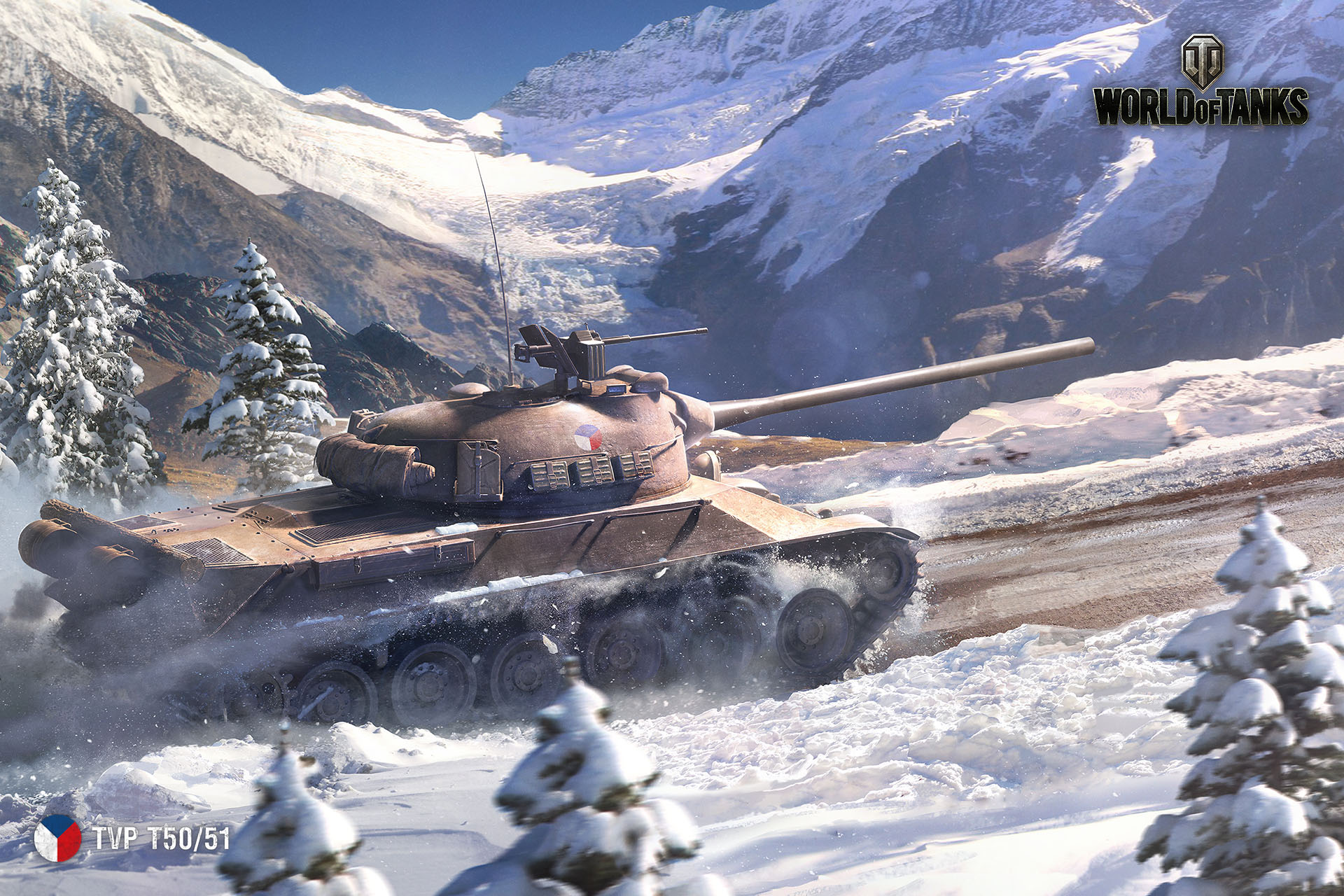
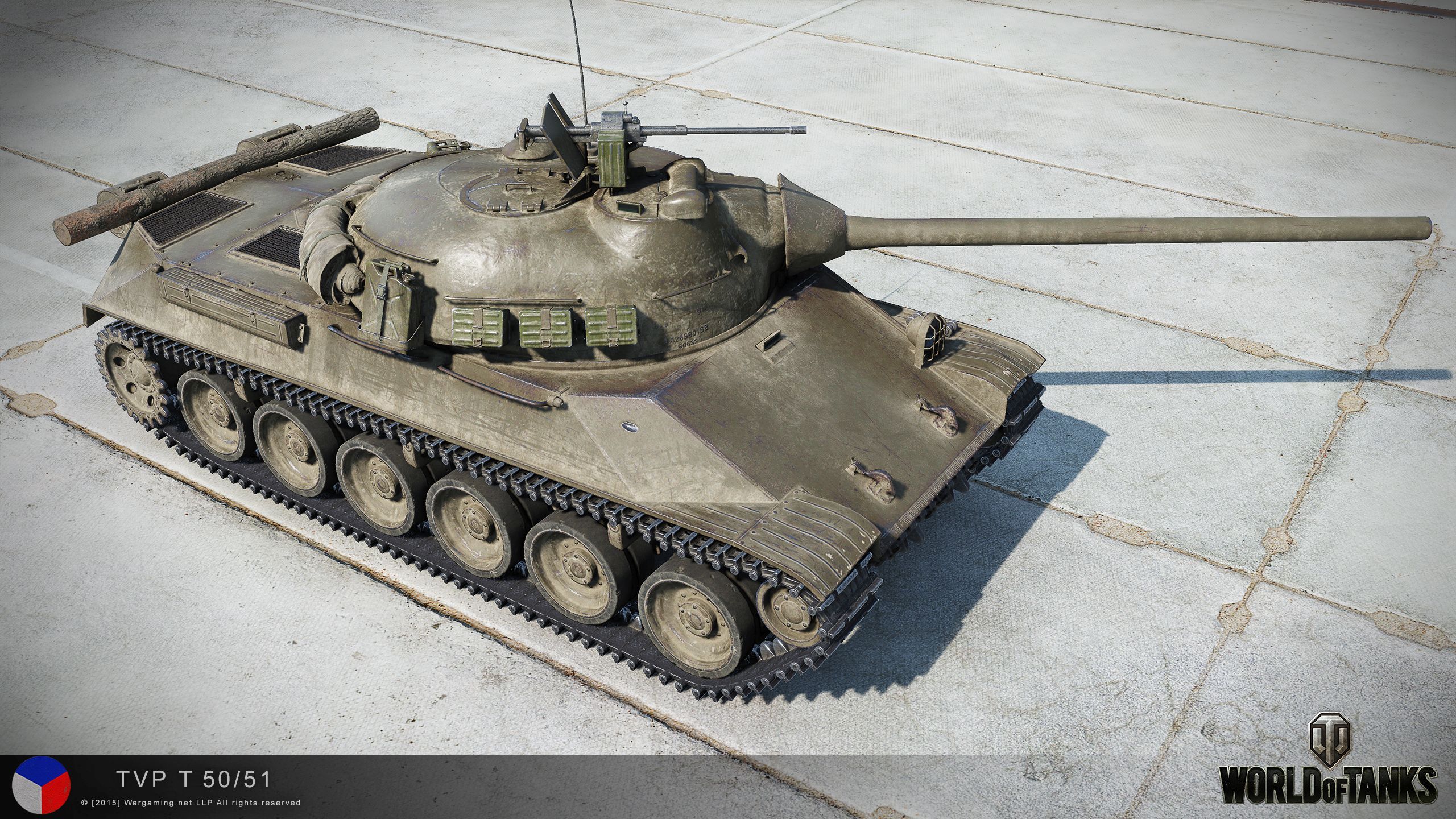
Image result for TVP 51 Czech world of tanks

Rendering of the Czech TVP T51 design courtesy World of Tanks


Readers of this blog will know we quite enjoy playing with Imagi-Nations, from the 1700's to the Cold War.

One of my fellow gamers has conceived of an interesting  Alternative History scenario, where WW2 never happened. The idea is to build alternative 1980’s Eastern European armies based on what the real countries may have done in that scenario, and thus avoid the relative sameness of all the various Eastern European WarPac armies. 

He started with Poland, looked at who manufactured their equipment and then replaced it with 1980’s functional equivalents from the same countries. Now, one of my Cold War armies is Czechoslovakia, and I wondered what they may look like in this scenario - the answer has proven to be very interesting.

The first thing you realise with the Czechs is that in the 1930’s and 40's they built all their own equipment, they didn't buy it from others as the Poles did. They also were designing and building their own equipment until the mid 50's, when the Soviets effectively put a stop to it. And even then they almost automatically re-engineered all the post-war Russian equipment they were given, used a higher proportion of own designs than any other WarPac member  (their own wheeled APC  the OT-64  and various gun carriages plus co-operation with Hungary to build a scout car, the OT-65) besides their own trucks, guns and aircraft designs. 

So, it’s highly likely that with no WW2 and no WarPac, they would still have designed and built their own weapons systems. Thus with the Alt-History scenario Czechoslovakia it wasn’t so much about which other countries’ 1980’s equipment I would use, but more what would they have built and what may it have looked like (and then how to model and represent it).  

Usefully, it’s possible to get an idea of what was on their mind as their efforts were only finally stopped in the mid 1950’s. From the point of view of the noticeably different weapons systems (in 6mm scale armies) they had:

  • Planned how to update the Pz 38 series – the chassis had proven very reliable in WW2, the gun carriages and Hetzer tank destroyer had had a very good war (the Swiss carried on using a modified Hetzer into the 70’s). This new "Lehký podvozek" (Light tank) light tank was to use the Pz 38 running gear, the much better engines now available, and take lessons from angled armour in its design. The Skoda T-17 design was given a Czech high velocity 75mm gun. Given the success of the WW2 Hetzer & Marder,  Tank Destroyers and Gun Carriages were likely variants. An APC was also in prototype stage, and given the planned armour it would have been a proper IFV.
 Posted Image
T-17 Light Tank


  • Designed an amphibious tank, the U-9376 Leták, in 1954 - several years earlier than the not dissimilar Soviet PT-76 in shape and concept but with a high velocity 75mm gun, not the low power 76mm. There was already a previous floating tank project (VOŽ), and a suspension and floating system were already available. Given the Czechoslovakians used the OT-62 based on the PT-76 chassis it's not hard to imagine and an APC would have followed.  
Posted Image


Leták Amphibious tank

  • Studied the later war tanks, especially the T-34 running gear and angled armour, and were designing a new MBT based on a number of lessons.  There were a number of evolutions of the “Tank for general use” - Tank všeobecného použití (TVP) - project. Below is the final form, c 1950/51. There are also drawings of a Tank Destroyer based on this hull with a German 128mm gun.
Image result for czech tanks cold war TVP 50/51


Rendering of the Czech TVP T51 design by World of Tanks


Tank destroyer based on TVP 51 hull - initially designed with a c 100 - 105mm gun in mind, allegedly it could carry a Czech version of the 128mm German gun

The For the Record blog has a more detailed discussion of various projects

Thus, in an Alt-History world the Czechoslovakians would very probably have built an entire family of light armoured vehicles in the 1950’s, plus an amphibious tank (and given their conversion of the BTR-50 into the OT-62 they would very possibly have built an APC option too), and a post war MBT and (less possibly) a derived Tank Destroyer with their version of the German 128mm gun.

The Czechoslovakian designs seem in general lighter or average weight with more powerful engines, and guns at the heavier end of the scale. All these tanks apparently would have had autoloaded guns. 

There is no record of similar Czechoslovakian post war armoured car or wheeled APC designs, but if one assumes they would have built the OT-64 and OT-65/66 wheeled vehicles and their various artillery systems anyway, that gives a good basis. In addition they experimented with using heavier weapons on the OT-64 and OT-65 (up to 30mm cannons, ATGW missiles and 82mm RRLs, and the SKOT is easily big enough to take larger guns - so that certainly gives a good set of wheeled weapons systems to go with in an Alt-Czechoslovakian force.  

All of these would have been both for home use and export. So, for my Cold War Alt-History army, all (all....) that is required is to work out how these designs would have evolved from entering service in the 1950's until the next generation vehicles used in the 1980's, and then what non-Soviet army TO&E they may have used, and finally how to represent them on the table - but that is for the next blog post...